
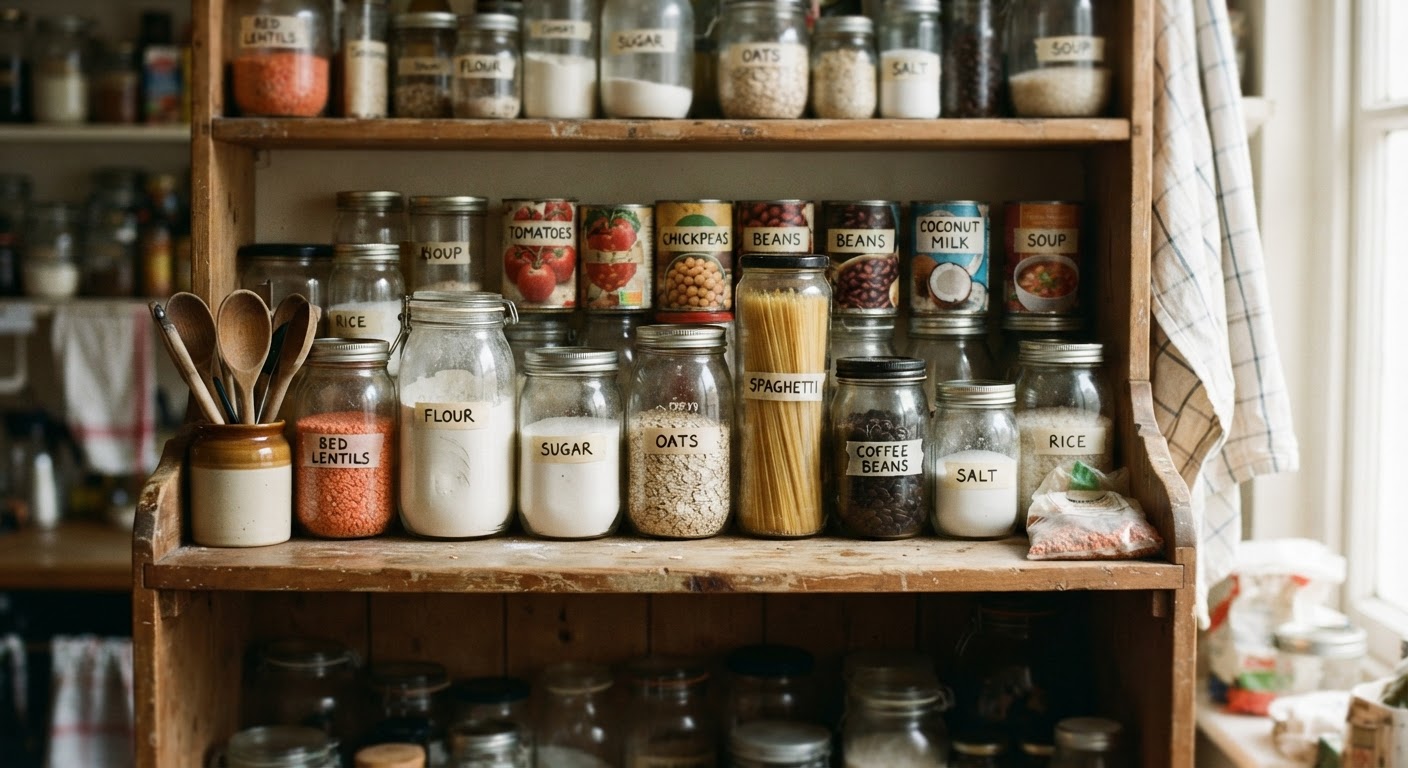
The hidden cost of forgetting what you already own
Somewhere in your pantry right now, there’s probably a half-used bag of rice, a jar of something that seemed like a great idea in July, and at least two containers of a spice you’ve bought three separate times. None of that is a character flaw. It’s just what happens when grocery shopping starts at the store instead of at home.
The real cost of this isn’t the duplicate jar of cumin. It’s the compounding effect: you buy fresh produce for a recipe, forget about the half-bag of frozen vegetables already in the freezer, and a week later you’re tossing wilted spinach while the freezer bag quietly turns to a block of ice. Multiply that by every shopping trip you’ve ever taken, and you start to see why so many households feel like they’re spending a lot on groceries while somehow running out of things to eat.
Food waste isn’t usually one dramatic mistake. It’s a slow leak – a little bit of produce here, a forgotten can there, a freezer item nobody remembers exists until it’s unrecognizable. A pantry-first approach doesn’t fix this by being stricter about spending. It fixes it by changing where your shopping trip actually begins.
The five-minute pantry check before you shop
The method is almost embarrassingly simple: before you write a single item on your grocery list, you walk through your own kitchen first. Think of it as checking the trail map before you set off, rather than wandering into the store and hoping you remember the route.
Here’s the five-minute version, broken into three quick stops:
- The fridge sweep. Open it and actually look – not just at eye level, but in the drawers and the door shelves where things hide. Note anything that needs to be used in the next few days before it turns.
- The pantry scan. Check shelves for partial bags, cans, and dry goods you already have. You’re not doing inventory for its own sake – you’re looking for “ingredients in search of a meal.”
- The freezer dig. This is the one most people skip, and it’s usually where the forgotten treasure is. Freezers are where good food goes to be ignored. A quick dig often turns up a protein or a bag of vegetables that can anchor two or three meals.
As you go, jot down anything that’s aging out – produce getting soft, bread going stale, dairy nearing its date. This short list becomes the backbone of your meals for the week. Only after this walkthrough do you open a new list and start adding things you genuinely need to buy.
The order matters. If you make the shopping list first and then check the pantry, you’ll mentally justify buying the new thing anyway because it’s “easier.” If you check the pantry first, the new list only fills actual gaps.
Why five minutes is enough
You don’t need a spreadsheet or a labeled inventory system to make this work. The goal isn’t perfect record-keeping – it’s just enough awareness to stop buying things you already have and to use up things before they spoil. A fast, unglamorous walk-through beats an elaborate system you’ll abandon after two weeks. Think of it like checking your gas gauge before a trip: quick, unglamorous, and it saves you from a much bigger problem down the road.
A worked example of a pantry-first list
Here’s how this might play out for an example household of two, planning a week of mostly home-cooked dinners. These numbers and items are illustrative only – your pantry and your week will look different.
Step 1: The pantry check turns up:
- Half a bag of rice
- One can of diced tomatoes
- A bag of frozen mixed vegetables, about two-thirds full
- Three eggs
- A chicken breast in the freezer, unlabeled but clearly recent
- Half an onion, slightly soft but usable
- A nearly-full jar of peanut butter
Step 2: Build meals around what’s already there. Before adding anything new, the household sketches a rough plan:
- Monday: Chicken and rice with the frozen vegetables and the half onion
- Tuesday: Tomato-based pasta using the canned tomatoes, needs fresh garlic and pasta
- Wednesday: Fried rice using leftover rice, eggs, and whatever vegetables remain
- Weekend: A simple grain bowl or soup, flexible depending on what’s left
Step 3: Only now write the “buy” list. Based on the gaps in the meal plan, the actual shopping list becomes short and purposeful:
- Garlic
- Pasta
- A few fresh vegetables for variety (carrots, a bell pepper)
- A small amount of fresh fruit
- Milk, if running low
- One backup protein for the weekend meal
Compare that to the list this same household might have written without checking the pantry first – likely including a full bag of rice, more canned tomatoes, a fresh onion, extra eggs, and probably a second bag of frozen vegetables, all stacked on top of what they already had. The pantry-first version isn’t about buying less out of restriction. It’s about not accidentally doubling up on things sitting three feet away in the kitchen.
Notice also that the plan leaves room for flexibility toward the end of the week. That “flexible soup or grain bowl” slot is intentional – it’s the safety valve for whatever produce or leftovers are still around by day five or six, so nothing quietly expires in the crisper drawer.
Keeping the habit going week to week
The hardest part of any new routine isn’t the first week – it’s the fourth week, when the novelty wears off and old habits start creeping back in. A few small structural choices make the pantry-first method easier to sustain without relying on willpower alone.
Pick a consistent “trailhead” day
Doing the pantry check on the same day each week – the morning before your usual shopping trip, for instance – turns it into a routine rather than a decision you have to remember to make. Pair it with something you already do, like Sunday coffee or Saturday errands, so it rides along on an existing habit instead of needing its own willpower.
Rotate the “use it up” shelf
Designate one shelf in the fridge and one spot in the pantry as the “use soon” zone. Anything flagged during your check gets physically moved there. This turns an abstract mental note (“I should probably eat that”) into a visual cue every time you open the door. It’s a small trick, but it works because it removes the need to remember – you just look at the shelf.
Keep a short, visible “ghost list”
Keep a running note – on paper, on the fridge, wherever you’ll actually see it – of ingredients you tend to forget about until they expire. Over a few weeks, patterns emerge: maybe it’s always fresh herbs, or bread, or that second bag of spinach. Once you know your personal waste pattern, you can plan smaller purchases of just those items, or build a regular meal that uses them up on schedule.
Let the list breathe
Pantry-first doesn’t mean rigid. If you get to the store and find a good deal on something outside your list, that’s fine – just make a mental note to check whether it fits a meal that week, or whether it needs to be the thing that uses up the sad half-onion before it becomes compost. The method is a starting point for the trip, not a locked itinerary.
Expect a slow build, not a sudden transformation
The pantry-first method tends to pay off gradually. The first week, you might notice one or two things you didn’t need to buy. By the second month, the freezer stops being a mystery box, the pantry shelves stop multiplying with near-duplicate items, and meal planning starts to feel less like a chore and more like assembling from what’s already on hand. That’s the real win – not a single dramatic savings moment, but a kitchen that quietly runs more efficiently every single week.
Like most good trail habits, this one works because it’s low-effort and repeatable. You’re not overhauling how you cook or adding a complicated system to your life. You’re just taking five minutes to look at the map before you start walking – and letting what you already have lead the way.